Beyond the virus: How Ebola affects children
July 27, 2026
Does Ebola affect children even if they don't get sick?
Yes. Many children will never contract Ebola, but they can still experience its consequences. Outbreaks can separate children from their families, disrupt their education, increase fear and anxiety, and place enormous pressure on households already struggling to cope.
For children, the outbreak doesn't begin and end with the virus. It changes the world around them. That’s why War Child is already responding. We are working with local partners, community leaders and health authorities in the Democratic Republic of Congo, Uganda and South Sudan to ensure children's needs are part of the Ebola response from the very beginning. We are participating in national and community coordination efforts so children's wellbeing isn't overlooked. And our teams and partners are getting ready to address the mental health and protection needs of children, should this outbreak continue to spread.
Why are children particularly vulnerable during an Ebola outbreak?
Children rely on adults and the systems around them to feel safe.
When parents become ill, schools close, or communities are disrupted, children can lose the people, places and routines that help them make sense of the world. They may not fully understand why life has suddenly changed, making uncertainty and fear even harder to cope with.
Children living in places already affected by conflict or displacement often face even greater challenges because the support they depend on is already under strain.
Our teams and partners will help families access clear, accurate information about Ebola through trusted community volunteers, local organisations and young people. In some locations, this work has already begin. By working through people communities already know and trust, we can reduce fear, address misinformation and connect families with support.
Why is Ebola especially challenging in places affected by conflict?
Many of the communities affected by the current outbreak were already facing conflict, displacement and limited access to essential services.
For children, Ebola is not replacing one crisis with another – it's adding another layer of hardship for people already living through difficult circumstances. That's why outbreak responses need to protect children's wellbeing alongside their physical health, while ensuring existing support for conflict-affected children continues. That’s also why funding for Ebola needs to strengthen, rather than replace, support for children already affected by conflict. Children's mental health, education and safety should be treated as essential parts of the response – not optional extras.
How can an Ebola outbreak affect a child's mental health?
An outbreak can be frightening and confusing. Children may worry about becoming sick themselves or losing someone they love. They often pick up on the fear and anxiety of the adults around them, even if nobody explains what is happening.
Some children become withdrawn. Others experience nightmares, struggle to sleep, find it difficult to concentrate or feel constantly anxious. These emotional effects don't disappear when an outbreak ends. Many children need support long afterwards to recover and regain a sense of safety.
Why does family separation matter so much in a health crisis like Ebola?
If a parent or caregiver becomes seriously ill with Ebola, they may need to be cared for in an isolation or treatment centre.
For a child, suddenly being separated from the person they trust most can be traumatic. They may not understand where their parent has gone or when they will see them again.
Keeping children connected with their families wherever possible, and ensuring they have safe, caring adults around them, is an important part of protecting their wellbeing during an outbreak. Where needed, War Child will work alongside local authorities and community networks to help children stay connected with their relatives, identify safe alternative care when needed, and support family tracing and reunification wherever possible. We're also ensuring that services to identify, trace, document and reunite children wherever possible continue to function no matter what happens.
How is education affected during an Ebola outbreak?
When schools close, children lose far more than lessons. They lose one of the most important protective spaces in their lives.
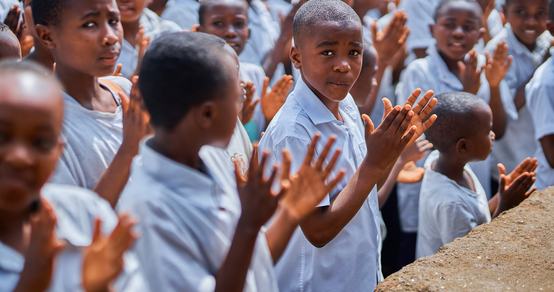
Schools are about much more than learning. They provide routine, friendship and a sense of normality during uncertain times. Schools are also a safe space for children, protecting them from abduction and kidnap. Teachers are often trusted adults who can identify when a child needs extra support, while classrooms give children the chance to play, socialise and simply be children.
We are supporting schools to remain open safely wherever possible by helping schools follow public health guidance and providing hygiene supplies such as handwashing facilities, soap and sanitiser. We are also training teachers, parents and student groups on recognising symptoms, prevention and reporting concerns. Our focus is on making sure that children – through trusted adults – and their families have the right information at the right time. And by working closely with students and schools, we are able to raise their needs and worries to the people making decisions. If schools are forced to close, we are ready to support home and small-group learning so children's education continues.
Can children experience stigma because of Ebola?
Yes. Fear and misinformation can cause families affected by Ebola to be treated differently by their communities. Clear information, trusted local leaders and community support are essential to reducing stigma and helping children feel accepted rather than feared.
Children whose relatives have been ill, or who have recovered themselves, may feel isolated or excluded by others who are afraid of infection.
To address stigma around Ebola, War Child and our partners work with trusted local organisations, community leaders and young people to share accurate information, challenge rumours and build confidence in the response. Community trust is one of the strongest tools for reducing stigma and ensuring children and families feel supported.
How does Ebola affect family life?
Normal life can be completely upended when outbreaks like Ebola occur. Movement restrictions, border controls and disrupted markets can make it harder for families to work and earn an income. When money becomes scarce, families may struggle to afford food, healthcare and other essentials.
These pressures can create additional stress for both parents and children at a time when families are already coping with uncertainty.
Across the response to Ebola, War Child is working to make sure children are not forgotten. By combining mental health support, community engagement, education, family support and trusted local partnerships, we aim to ensure children not only survive an outbreak, but get through with hope for the future.